
SunBurn: Beat the heat by following simple tips!
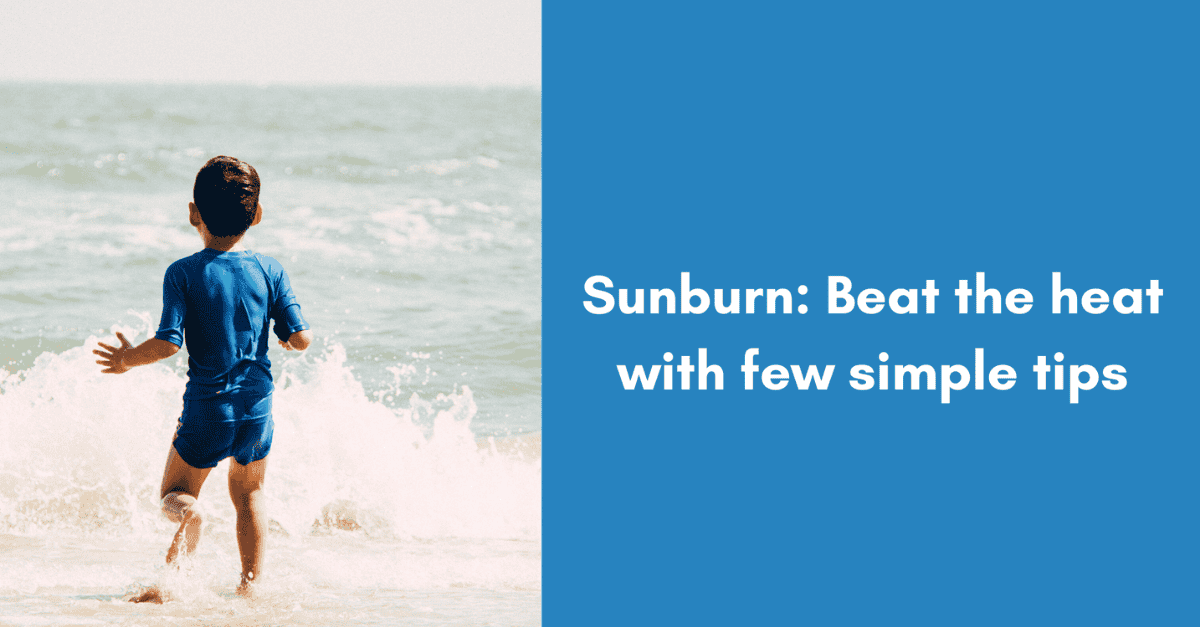
Summer is Here! Protect Your Child from Sunburn
With the arrival of summer, outdoor fun increases, but so does the risk of sunburn, especially among children. Sunburn is a common summertime concern that can lead to discomfort, skin irritation, and, in some cases, long-term skin damage. Young children, in particular, are more vulnerable due to their sensitive skin.
Symptoms of Sunburn in Children
A child may develop the following symptoms after prolonged sun exposure:
- Red or blistered skin due to excessive sun exposure
- Pain, redness, and swelling that begins around 4 hours after sun exposure
- Peak symptoms at 24 hours, with improvement typically starting after 48 hours
Understanding the Severity of Sunburn
Sunburn can vary in intensity depending on the duration of sun exposure and the level of skin protection. Here’s how sunburn severity is classified:
- First-degree burns: Most sunburns fall into this category, causing pink or red skin.
- Second-degree burns: Prolonged exposure can lead to blistering and more severe burns.
- No third-degree burns or scarring: Unlike other burns, sunburn does not result in permanent scarring.
How to Protect Your Child from Sunburn
Preventing sunburn is key to keeping your child’s skin healthy. Consider these tips:
- Apply broad-spectrum sunscreen (SPF 30 or higher) at least 15 minutes before sun exposure.
- Encourage protective clothing, such as hats and sunglasses, when outdoors.
- Keep children hydrated and seek shade during peak sun hours (10 AM to 4 PM).
If your child experiences severe sunburn with blistering, fever, or dehydration, it is essential to seek medical attention. If you’re searching for the best pediatricians in Altoona, PA, consider consulting one with expertise in pediatric dermatology. A skilled pediatrician can provide the best advice on sunburn treatment, skin care, and overall summer health.
By taking preventive measures and knowing when to seek medical help, you can ensure a fun and safe summer for your child!
What Causes Sunburn?
Summer time involves a lot of outdoor activities. It is obvious for the body to be exposed to the Sun’s harmful UV rays. Following points throw light on what actually happens due to over-exposure to Sun’s UV rays:
- Direct sun exposure. Warning: clouds don’t help. 70% of UV light still gets through on cloudy days.
- Reflected sun rays. From snow 80% is reflected, from sand 20%, from water only 5%.
- Tanning lamp or sun lamp.
- Tanning bed. A common cause in teens.
What to do if the symptoms show up?
Following are few scenarios over which action can be taken with respect to the severity of Sunburn:
Call 911 Now
- Passed out (fainted) or too weak to stand
- You think your child has a life-threatening emergency
Call Doctor or Seek Care Now
- Fever over 104° F (40° C)
- Can’t look at lights because of eye pain
- Fever and looks infected (spreading redness more than 48 hours after the sunburn)
- Your child looks or acts very sick
- You think your child needs to be seen, and the problem is urgent
Contact Doctor Within 24 Hours
- Sunburn pain is severe and not better after using care advice
- Large blisters (more than ½ inch or 12 mm)
- Many small blisters at the burn site
- Blisters on the face
- Swollen feet make it hard to walk
- Looks infected (draining pus, red streaks, worse pain after day 2) and no fever
- You think your child needs to be seen, but the problem is not urgent
Contact Doctor During Office Hours
- Itchy rashes in sun-exposed skin occur many times
- You have other questions or concerns
Taking care of your child’s sunburn woes:
Sunburn can be an irritating experience for your child. The blisters or the rashes may seem unbearable at times. Proper care and medical attention can ease the sting of Sunburn.
Ibuprofen for Pain:
For pain relief, give an ibuprofen product (such as Advil). Start this as soon as you can. Give every 6-8 hours. It can greatly limit the pain and swelling. Must give for 2 days. Caution: Not approved for age under 6 months.
Steroid Cream for Pain:
- Use 1% hydrocortisone cream (such as Cortaid) as soon as possible. No prescription is needed.
- If used early and continued for 2 days, it may reduce swelling and pain.
- Use a moisturizing cream or aloe vera cream until you can get some.
- Use creams only. Avoid putting ointments on red skin. Reason: They can block the sweat glands.
- Burned skin can be very painful. Covering it with a cream can give great relief.
Cool Baths for Pain:
- Use cool wet washcloths to the burned area. Do this several times a day to reduce pain and burning.
- For larger sunburns, give cool baths for 10 minutes. Caution: Avoid any chill. Can add 2 ounces (60 mL) baking soda per tub.
- Do not use soap on the sunburn.
- Offer extra water on the first day. This prevents dehydration and dizziness.
- Blisters – Don’t Open. Caution: Leave closed blisters alone. Reason: To prevent infection.
- For broken blisters, trim off the dead skin. Use fine scissors cleaned with rubbing alcohol.
Antibiotic Ointment for Open Blisters:
- For any large open blisters, use an antibiotic ointment (such as Polysporin). No prescription is needed.
Sunscreens:
Use sunscreen with an SPF of 15 or higher. Fair-skinned children need a sunscreen with an SPF of 30. This is especially true if your child has red or blond hair.
Infants and Sunscreens:
- The skin of infants is thinner than the skin of older children. It is more sensitive to the sun. Sunburns can occur quickly.
- Sun avoidance is best for children under 6 months. Stay in the shade.
Protect Lips, Nose and Eyes:
- To prevent sunburned lips, apply a lip coating that contains sunscreen.
- If the nose or some other area has been burned often, protect it completely. Use zinc oxide or titanium oxide ointment.
- Protect your child’s eyes from the sun’s rays and cataracts with good sunglasses.
High-Risk Children:
- Some children are at higher risk for sunburn. If your child has red or blond hair, he is at higher risk. Fair-skinned children and children who never tan are also at higher risk.
- These children need to use sunscreen even for brief exposures.
- They should avoid sun exposure whenever possible.
High-Risk Time of Day:
Avoid exposure to the sun during the hours of 11:00 AM to 3:00 PM. This is when the sun’s rays are most intense.
Disclaimer: This health information is for educational purposes only. You, the reader, assume full responsibility for how you choose to use it.
Citation/References:
https://phcaaltoona.com/phca-symptom-checker/#!/topic/93/sunburn